Headless CMS for eCommerce: The 2026 Guide
If your online store is growing rapidly, you have likely hit a technological ceiling. Traditional eCommerce platforms are great for starting out, but as your traffic surges and your customers demand faster, more interactive experiences, all-in-one systems can slow you down.
To scale effectively in 2026, brands are leaving rigid templates behind and embracing Headless Commerce. At Dfeelings, we build digital ecosystems designed for enterprise growth. Here is everything you need to know about migrating to a headless architecture.
What is a Headless CMS in eCommerce?
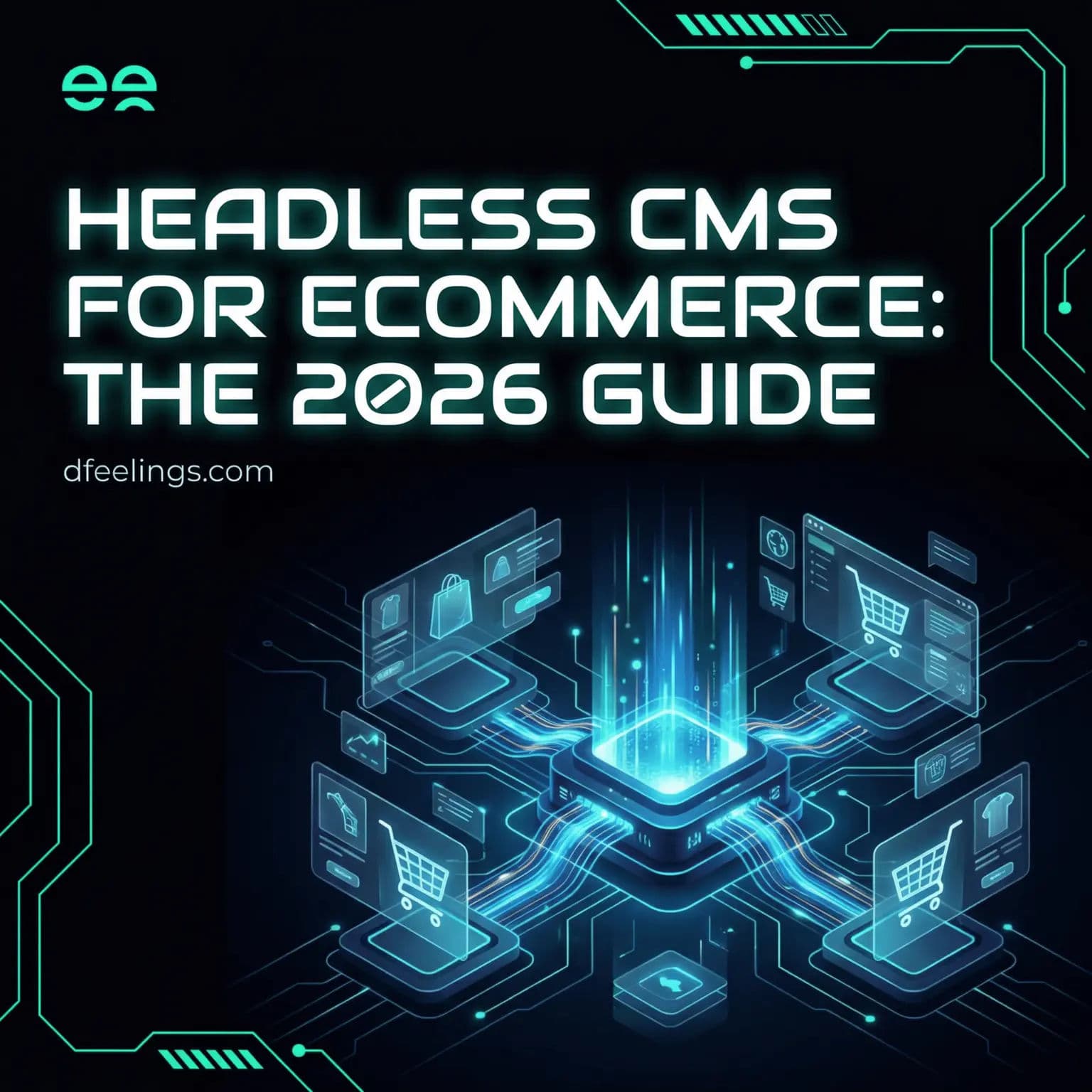
A Headless CMS (Content Management System) is a back-end content repository that is entirely separated from the front-end presentation layer. Instead of being tied to a specific website template, a headless CMS uses APIs to deliver products, content, and data to any device, screen, or application seamlessly.
Top 4 Benefits of Headless Commerce
Why are the top eCommerce brands in the Middle East and globally making the switch? Here are the core advantages:
- Lightning-Fast Page Speeds: Because the front-end is not weighed down by heavy back-end database code, your web pages load almost instantly. This drastically improves both user experience and technical SEO.
- Limitless UI/UX Customization: Designers are no longer restricted by predefined platform themes. You have a blank canvas to build highly intuitive, completely bespoke user journeys that drive conversions.
- True Omnichannel Selling: Consumers buy on desktop, mobile apps, smartwatches, and digital kiosks. A Headless CMS allows you to manage inventory in one place and push it via API to every digital touchpoint simultaneously.
- Future-Proof Scalability: By separating the front-end and back-end, your site becomes more secure. You can also easily swap out payment gateways or search providers without rebuilding your entire website.
Traditional vs. Headless eCommerce
Not sure which architecture fits your business model? This quick comparison highlights the key differences:
Feature | Traditional eCommerce | Headless eCommerce |
Architecture | Front-end and back-end are coupled. | Front-end and back-end are separated. |
Best For | Startups and small businesses. | Medium scaling brands and enterprise companies. |
Design Flexibility | Limited to platform themes and plugins. | 100% custom UI/UX design freedom. |
Performance | Can become bloated; requires heavy caching. | Ultra-fast, API-driven performance. |
Power Your Store with the FeelStack System
At Dfeelings, we didn't just adopt headless technology; we built our own.
Our proprietary FeelStack System is a powerful SaaS platform that provides a robust headless CMS, an unshakeable eCommerce backbone, and integrated social media insights. Whether you are in retail, automotive, or healthcare, FeelStack gives your brand the speed, scalability, and seamless user experience needed to dominate the market.
Frequently Asked Questions (FAQs)
How much does it cost to move to a Headless CMS?
The cost of migrating to a headless architecture varies depending on the size of your catalog and the complexity of your custom front-end design. Because it requires custom development, it is typically an enterprise-level investment designed to generate a high ROI through increased conversion rates.
Is Headless eCommerce good for SEO?
Yes. Headless eCommerce is excellent for SEO. Because it drastically improves core web vitals and page load speeds, search engines like Google rank headless websites higher than slower, traditional eCommerce sites.
Do I need an in-house development team to run a Headless CMS?
While headless systems require developers to build and set up, modern platforms like the FeelStack System by Dfeelings come with user-friendly dashboards. Your marketing and content teams can easily update products and blogs without needing to write code.